

Have you ever wondered what happens when students stop asking “Why do I need to learn this?” and start asking “How can I use this to fix something real?”
That shift is at the heart of what modern STEAM education can achieve. As explored in our previous article on the STEAM Heroes project, one of the biggest challenges in science and mathematics classrooms is the gap between abstract concepts and the world students actually live in. When learning is disconnected from real life, motivation fades. But when it connects to genuine problems: pollution, food waste, energy use, something changes.
STEAM Heroes is built precisely around this idea: making learning relevant by connecting it to real-life contexts and challenges students can relate to. Sustainability is one of the most powerful bridges for doing exactly that. The climate change is not hypothetical, the air quality outside your school window is not just a textbook exercise.
Let’s be honest: “sustainability” can sound like a buzzword adults throw around at conferences. But when students get to build a smart irrigation system, analyze the air quality in their neighborhood, or code a tool that tracks food waste in the school cafeteria, that’s when things get real. That’s STEAM in action.
STEAM (Science, Technology, Engineering, Arts and Mathematics ) is not just a catchy acronym. It’s a way of teaching that breaks down the walls between subjects and puts students in the driver’s seat of learning. And when you pair STEAM with sustainability, something clicks. Suddenly, the world outside the classroom becomes the curriculum.
“The best thing about STEAM and sustainability together? There are no fake problems. Every challenge is real and students know it.”
Why This Combo Works So Well
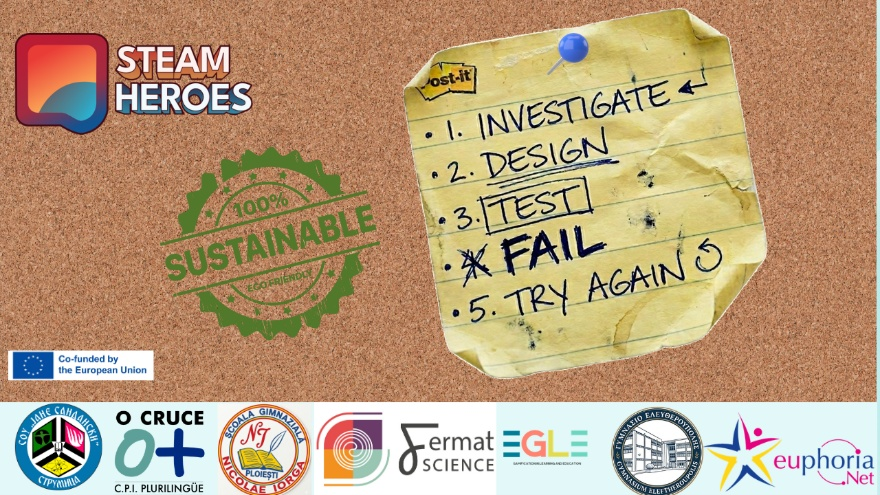
Sustainability challenges are complex. Climate change, water scarcity, food systems, energy , none of these have a single answer. That’s exactly why they are perfect for STEAM learning. Students can’t just memorize a formula and call it done. They have to investigate, design, test, fail, and try again. They have to think like engineers AND artists AND scientists, sometimes all at once.
Plus, it’s motivating. When a 9th grader realizes their project might actually help their community reduce energy use, they are not doing homework, they are doing something meaningful. That shift in mindset changes everything.
Practical Examples
|
School Garden Data Lab
|
Trash Audit Project
|
Climate App Hackathon
|
Mini smart irrigation system |
|
Students plant a vegetable garden, then use math and science to track growth, water usage, and soil health. They present findings with infographics they design themselves.
|
Teams sort, weigh, and categorize a week of school waste. They then use their data to redesign the recycling system and pitch it to school leadership.
|
Coding teams build apps or dashboards that visualize local climate data temperature trends, flood risk, air quality using open government datasets.
|
Students build a simple system using moisture sensors that waters plants only when the soil is dry. |
The Art in STEAM Matters Too
Don’t skip the “A.” When students create murals about biodiversity loss, write short films on plastic pollution, or design packaging that uses zero waste , they are communicating complex ideas to people who might never read a scientific report. Art makes sustainability emotional, and emotion drives change..
Getting Started Doesn’t Need to Be Big
Teachers don’t need a grant or a fancy lab to get started. A composting bin, a rain gauge, a free coding platform, and a curious class are plenty. The projects grow from there. What matters is giving students a real problem, some tools, and the freedom to mess up and figure it out.
Because here’s the truth: the students in classrooms today are going to be the ones actually dealing with the consequences of climate change. STEAM education doesn’t just prepare them for jobs, it prepares them to be the problem solvers the planet is going to need.